

Soft Tissue Injuries
Soft Tissue Injuries
When talking about soft tissue, we mean tendons, muscles, ligaments, bursae, fascias, and aponeuroses. This is opposed to bone, which is a hard tissue. The term "soft tissue lesion" refers to tears of certain fibers in a muscle tendon, bursa, fascia, or aponeurosis. We therefore speak of tendinitis, bursitis, fasciitis, and aponeurositis. These fiber tears appear following:
- Repeated efforts and postural fatigue.
- An accident.
- Spinal subluxations (psoas or gluteal tendinitis) or extremities (shoulder blockage, knee and ankle sprain). We must then treat both the tendinitis and the associated joint blockage.
What a soft tissue injury involves ?
If there is no complete tear or tendon/ligament avulsion during a muscular accident, a natural self-repair process takes place. It consists of the appearance of collagen-type scar tissue produced by the body, which will "reweld" the broken fibers. In cases of small fibrillar tears, the patient recovers very well. But, when it comes to larger tears, the pain from the tear forces the muscle to rest, and the repairing collagen (built by our body) sometimes overflows the injured area and creates adhesions. All this causes pain during movement, affects muscle elasticity, tissue gliding inside aponeuroses, creates inflammatory reactions, and consequently reduces the mobility of the associated joint. It can also cause compression on neighboring nerves.
Different types of injuries
Tendinitis is a painful inflammation of a tendon felt during palpation or movement. The tendon is the fibrous end of the muscle that attaches it to the bone. When the tendon sheath (the envelope surrounding the tendon) is also inflamed, it is called tenosynovite.
Bursitis is a painful inflammation of a bursa, sometimes accompanied by a burning sensation felt during palpation and movement. A bursa is a small fluid-filled sac containing synovial fluid. It is located between a bone and a muscle. Its role is to help the muscle and its tendons glide smoothly over a joint or bone. Bursitis occurs due to repeated micro-traumas or impacts. It is common on the side of the hip and in the shoulder.
Plantar Fasciitis is defined as a painful inflammation of the plantar fascia insertion under the heel. It is worsened by standing and walking.
Chiropractic treatment for soft tissue injurie
Lower Limb
- Plantar fasciitis: pain under the heel.
- Chronic Achilles tendinitis: pain in the Achilles tendon.
- Shin splints: pain on the shin bone (tibia).
- Hamstring injury: pain on the back of the thigh.
- Quadriceps injury: pain on the front of the thigh, just above the knee.
- Patellar tendinitis: pain below the kneecap.
- Iliotibial band syndrome and TFL injury: lateral thigh pain.
- Hip bursitis: inflammation in the external part of the hip joint.
- Psoas tendinitis: pain where the psoas tendon inserts into the lesser trochanter of the hip.
- Adductor tendinitis: pain where the adductor tendons insert into the pubic bone.
Upper Limb
- Chronic rotator cuff tendinitis of the shoulder (supraspinatus, infraspinatus…)
- Tennis elbow (lateral epicondylitis of the elbow) and golfer's elbow (medial epicondylitis of the elbow)
- Thumb tendinitis (De Quervain's disease) with pain in the lower forearm near the radius
- Trigger finger or trigger thumb (stenosing tenosynovitis)
Traitement d'une lésion des tissus mous par le chiropracteur
The therapist will diagnose the injury using various palpation and mobilization techniques. If it is indeed a soft tissue injury, the chiropractor will use two complementary techniques:
- Compression of the inflamed area of the tendon while asking the patient to perform the movement(s) that slide the tendon within its sheath.
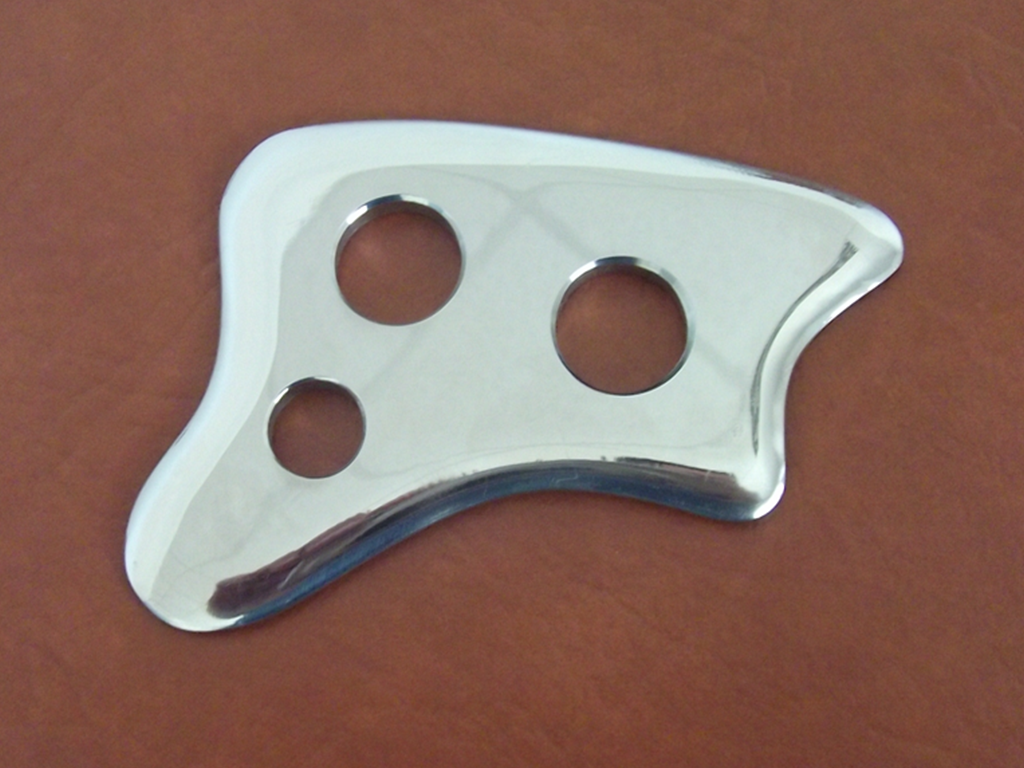
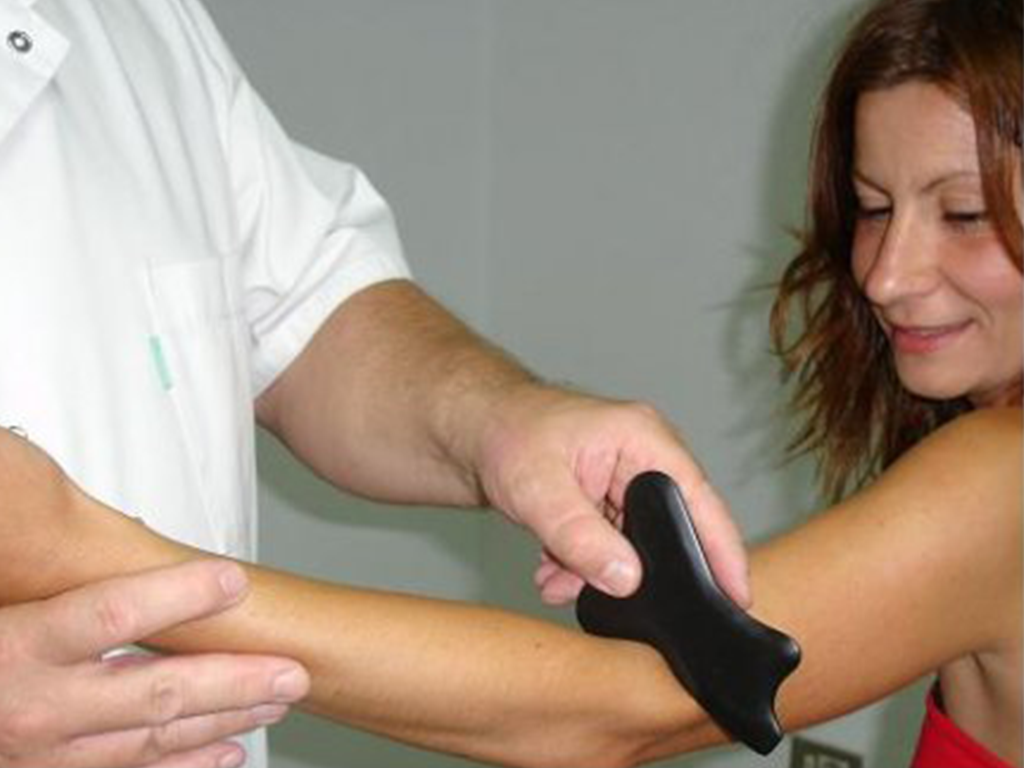
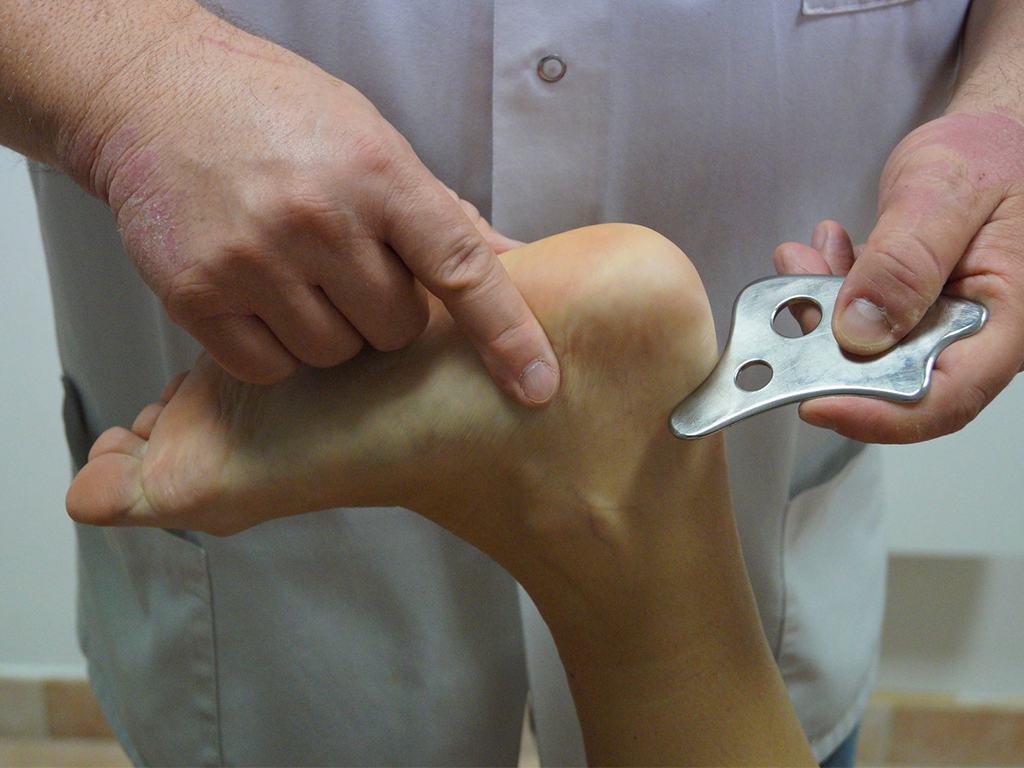
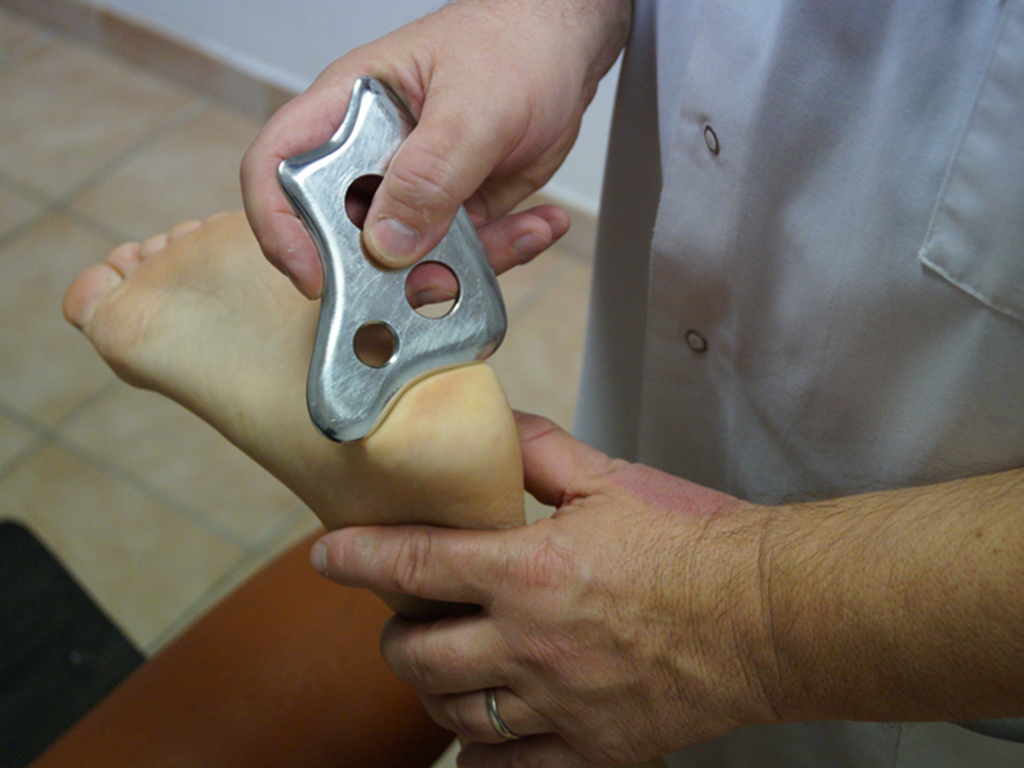
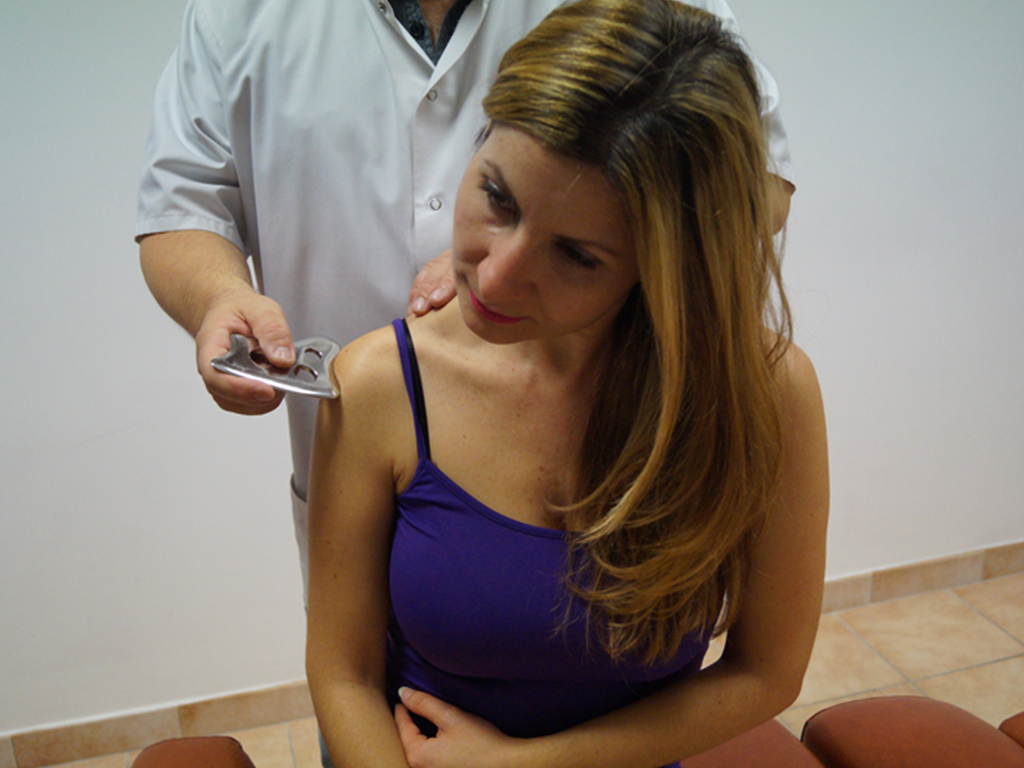
- Repeated scraping of the inflamed area (about twenty specific strokes per session) using an instrument called a Myo-Dren blade. This scraping action with the blade aims to break down and mobilize unwanted collagen clusters, thus clearing the way to restart the healing process of the injured tissue. Furthermore, the use of the blades helps identify injured areas through the gritty resistance encountered during the scraping—an identification that is not always easy with manual palpation. This sweeping action will then be extended to the rest of the muscle.
A Myo-Dren blade is a multi-angular surgical steel instrument designed to adapt to virtually all muscle shapes and sizes.
Note: in the case of shoulder periarthritis, there is a joint lesion and an associated tendinitis. The chiropractor will have to treat both. See chapter "Shoulder lesion".
Treatment and frequency of sessions: 3 to 6 scheduled sessions, spaced 10 days apart.
The compression and scraping techniques can be applied many years after the injury occurred and still be effective.
-
- Elbow tendinitis treatment
-
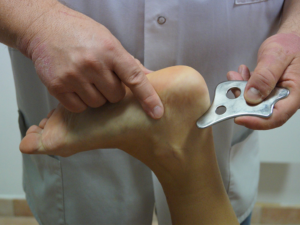
- Achilles tendinitis treatment
-

- Myo-Dren instrument scraping on plantar fasciitis
-

- Myo-Dren instrument scraping on rotator cuff lesion
-
- Myo-Dren instrument scraping on de Quervain’s tenosynovitis
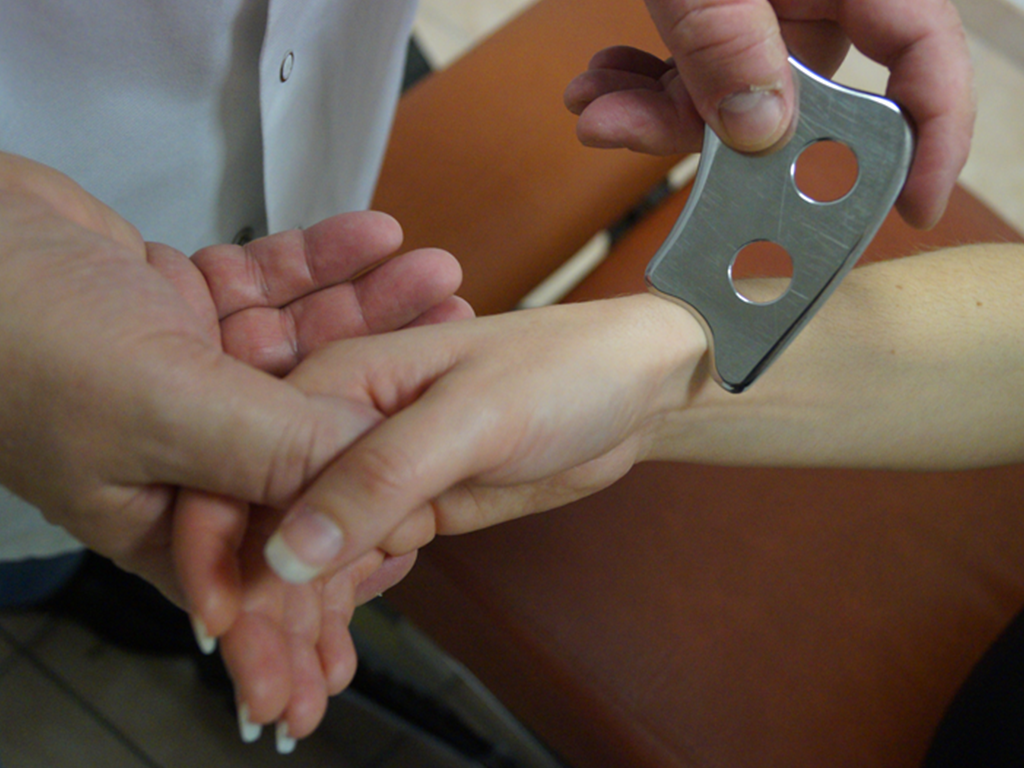
-
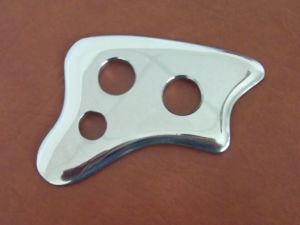
- Myo-Dren instrument